Industrial storage cabinets sit at the intersection of three requirements: they carry heavy drawers, they get opened hundreds of times a shift, and some of them must lock. The slide choice sets how well the cabinet does all three.
Heavy drawers, frequent cycles
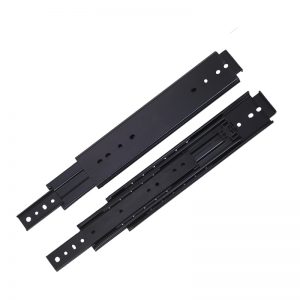
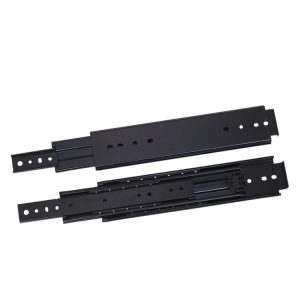
Plant cabinets hold tooling, dies, spare parts and consumables — drawers often reach 50–80 kg. The slide must carry that at full extension without sag, and survive thousands of cycles a year. Three-section ball bearing slides with 1.8–2.0 mm rails cover this duty; confirm the pair rating and ask for cycle data rather than accepting a catalogue number.
Lock-in for daily use
Where drawers do not need a key but must stay closed — under vibration, on forklift-adjacent shelving, in transit — lock-in slides hold the drawer shut with a spring detent. Zero extra operating steps, no key management, and it prevents the frustrating “drawer open, parts on the floor” failure.
Lock-out for restricted storage
For controlled storage — tooling, chemicals, valuables — full lock-out slides engage a physical lock at the closed position, released by a key or the cabinet’s locking system. Specify the lock mechanism together with the cabinet lock so both are keyed consistently.
Lever disconnect for maintenance
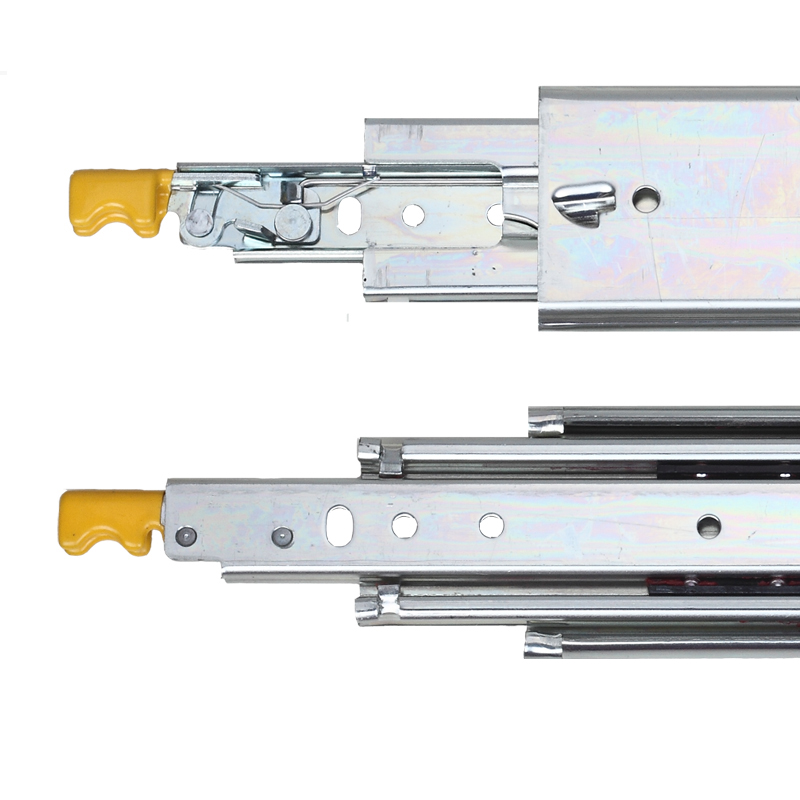
Drawers that get cleaned, swapped or serviced benefit from lever-disconnect slides: the drawer lifts off without tools, and the release lever sits at the drawer front. Maintenance teams replace a liner or clean a chemical drawer in minutes instead of dismantling the cabinet.
Security cabinets earn their keep at the moment of need: the drawer must open when a technician is mid-job and stay shut when the cabinet is unlocked and jostled. Lever disconnect serves the first, lock-in serves the second, and full lock-out only where the drawer genuinely needs a key. Plan the mechanism per drawer, and the hardware stops being a point of failure in plant operations.