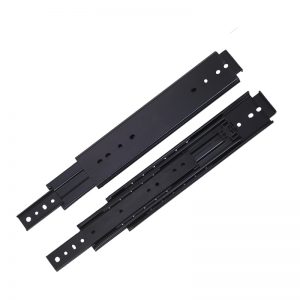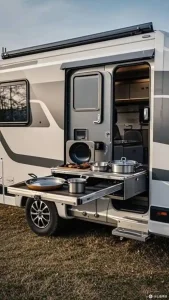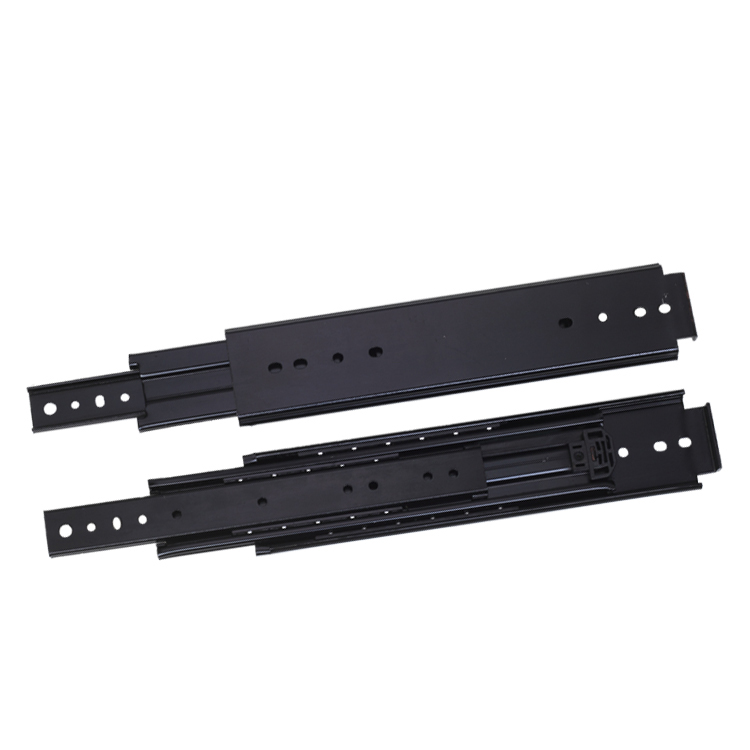
Tool chests and roll cabs put slides under the worst duty in the furniture world: heavy drawers, full extension, repeated slams, and weight concentrated at the drawer front. Buyers who only compare catalogue load numbers often end up with slides that sag in month three. Here is how the rating actually works.
How pair ratings are defined
A “100 kg pair” rating means a matched left-right set carries 100 kg total, evenly distributed, in the fully extended position — the weakest moment for any slide. The rating depends on rail section thickness, ball count and ball race geometry. A 100 kg-rated slide is built differently from a 45 kg one even when the length is the same, so confirm the rail material thickness (1.8–2.0 mm is the usual range for heavy duty) rather than trusting the number alone.
Three-section design and full extension
Tool chest drawers need the whole drawer accessible, so three-section slides with 100% travel are standard. Full extension also lets the drawer carry its load with the most stable geometry — and it is the configuration where a cheap rail shows deflection immediately.
Deflection and cycle checks
Two tests matter. Load capacity testing verifies the drawer holds the rated weight without visible sag at full extension. Cycle life testing runs the loaded drawer open and close repeatedly — 50,000 cycles is the benchmark for tool chest hardware, 100,000 for professional lines. Both tests can be run on demand for your order and reported with the shipment.
Finishes that survive the garage
Tool storage sees oil, solvents and humidity. Zinc-plated or black zinc finishes handle the garage environment; powder-coated rails add scratch resistance where drawers slide against each other. Match the finish to where the chest will live — a workshop chest and a showroom-grade box have different requirements.
A load rating is only meaningful with the test condition attached: evenly distributed, both slides, fully extended. When you compare 100 kg slides from two factories, ask what rail thickness and ball count each uses, then check the deflection with a real loaded drawer. That is how buyers end up with tool chests that still track straight after two years instead of drawers that sag in month three.