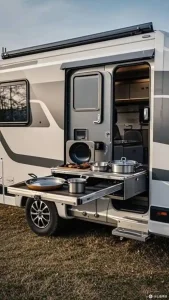
Machines hide a surprising amount of drawer hardware: control panels that pull out for programming, keyboard trays, service drawers under cutting beds, maintenance trays in enclosures. These slides work harder than furniture slides because they carry electronics and tooling, open and close constantly, and sit inside machines where failure means downtime.
Load: electronics are heavier than they look
A control panel with screens, wiring and modules easily reaches 30–50 kg. Specify the pair rating with margin — a 45 kg-rated slide for a 30 kg panel leaves headroom for added modules. If the tray carries tooling or dies, go to the 80–100 kg class and confirm the rail section thickness in the quotation.
Full extension for maintenance access
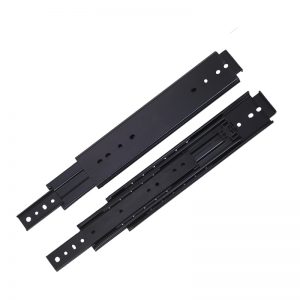
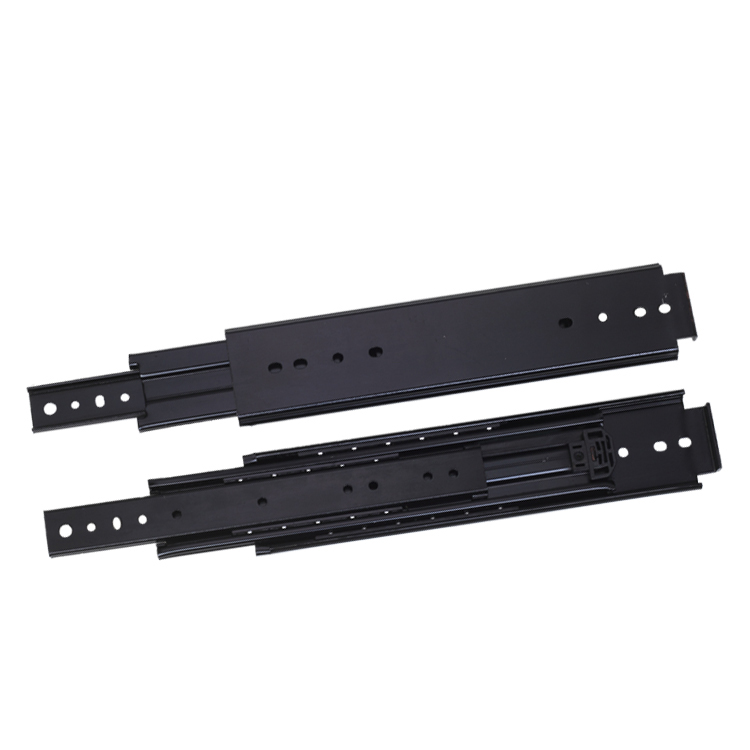
Service trays and maintenance drawers need 100% travel so a technician reaches the back without contorting. Three-section ball bearing slides provide this with stable geometry at full extension — the position where load capacity is actually defined.
Locking for safety and transport
Control panels that must stay closed during machine operation benefit from lock-in slides; maintenance drawers that must not open on a moving machine need lock-out or a lever-disconnect variant. For machines shipped assembled, lock-in slides prevent drawer damage in transit.
Documenting the spec
Machine builders live on documentation. Ask your slide supplier for the same: pair rating, rail thickness, ball count, cycle data (50,000 cycles minimum for production equipment) and material certificates. Machine builders usually request these alongside the first-off sample, so the fit is proven before the enclosure design is frozen.
Machine builders should treat slides as motion components with a documented spec — travel, load at full extension, cycle target and finish — because the enclosure design depends on all four. When the slide is specified to the drawing rather than picked from a catalogue, service trays and control panels keep their geometry for the life of the machine. That is the standard the rest of the build is held to, and the hardware should match it.