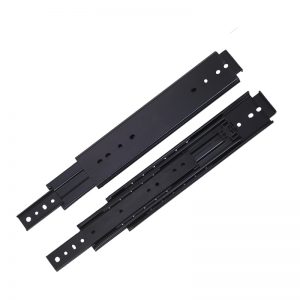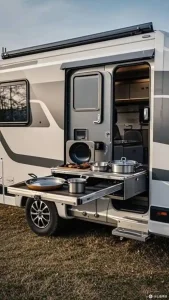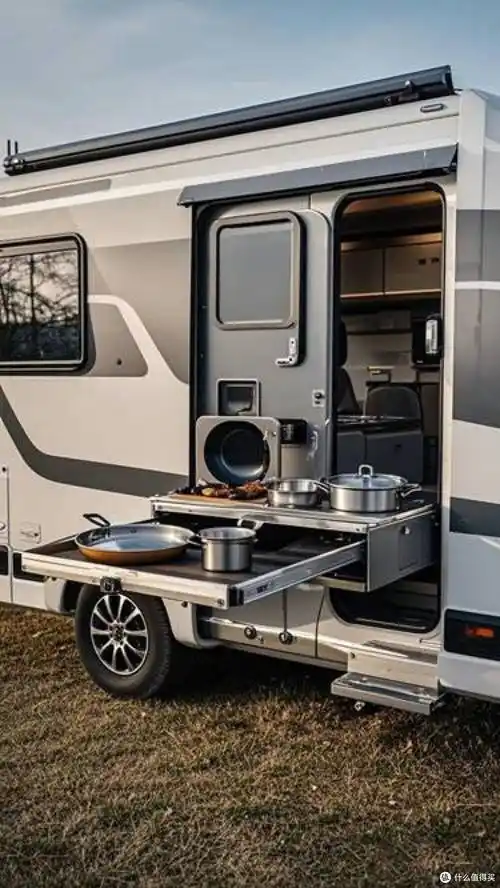
Basket pull-outs — the wire racks and trays that slide out of kitchen cabinets — carry everything from canned goods to cast iron, and they live in the wettest, busiest zone of the kitchen. The slide is the difference between a pull-out that glides for a decade and one that starts sticking in the second year.
Why stainless in the kitchen
Kitchen baskets sit under sinks, beside dishwashers, and in pantries where steam and cleaning spray are routine. Zinc-plated slides corrode at the ball race and the rail edges when exposed to humidity cycles. Stainless steel rails (304 grade) remove the coating question entirely — rails, balls and rivets all resist corrosion together, so the assembly does not develop rust pockets that jam the balls.
Load: baskets get loaded from the front
A full pantry basket easily carries 20–35 kg, and the weight is concentrated toward the drawer front where the leverage is worst. Specify the pair rating with margin — 45 kg pairs are the comfortable standard for kitchen baskets, leaving headroom for the moment someone stacks a second level of jars. Full extension (100% travel) matters here: a pantry basket is only useful if the back row is reachable.
Soft-close on heavy baskets
Heavy baskets build momentum when pushed shut, and the slam stresses both the basket and the cabinet frame. Hydraulic soft-close dampers slow the final 25–30 mm, protecting the hardware and the cabinet. On baskets over 30 kg, soft-close is less a comfort feature and more a durability feature.
Sample before you standardize
Kitchen programs lock in hardware early, so verify with a loaded sample: load the basket to your maximum, cycle it, and check the slide at full extension. Load capacity and cycle life testing are run to your program and the results ship with the order.
Kitchen basket systems get judged on the feel of the travel and the silence of the close, but they fail on corrosion and weld quality long after the showroom impression fades. Sample the complete assembly — rail, basket and damper together — because that is the unit the consumer lives with. Stainless rails remove the most common failure, and the basket welding decides how long the system stays rigid.