Machinery vibrates — during cutting, during transport, during years of service. On machines with drawers or trays, that vibration works on the slide assembly: races wear, balls develop play, and drawers can shift in their closed position. Captive slides are the engineering answer for these environments.
What captive means
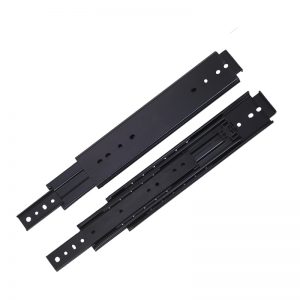
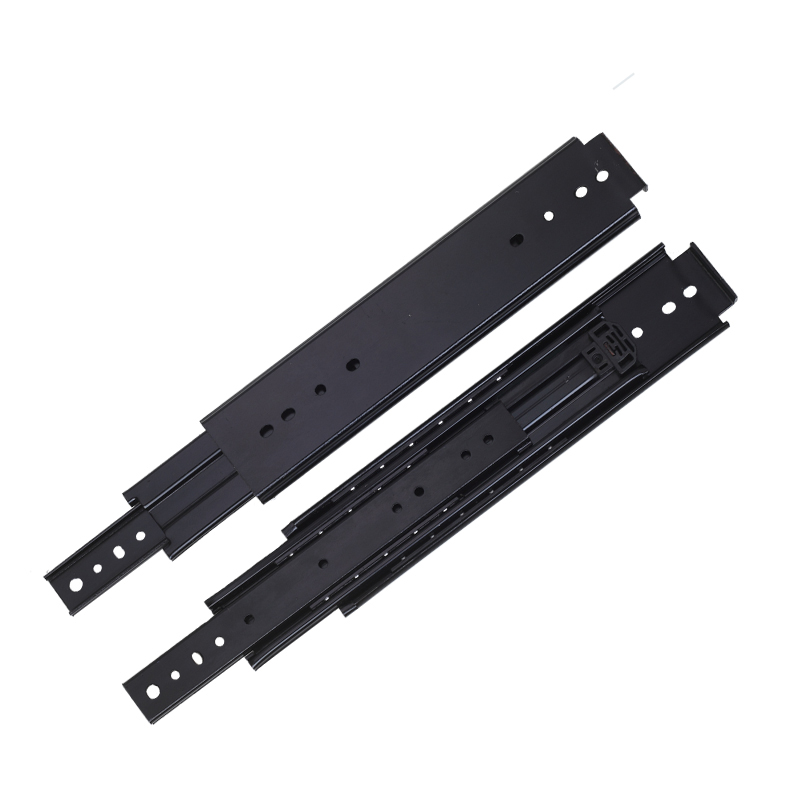
A captive slide keeps the drawer member engaged with the cabinet member in both the horizontal and vertical directions, even under side load. Standard slides rely on the drawer weight to stay in position; captive designs add engagement geometry that resists lifting and lateral shift. The result: consistent alignment, less wear, and a drawer that opens smoothly years in.
Where captive slides earn their cost
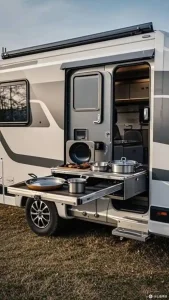
Any drawer that takes side load is a candidate: machine enclosures, tool cabinets on moving bases, service carts, vehicle storage. If the drawer carries precision tooling or electronics that must stay aligned, captive slides prevent the small misalignments that turn into wear.
Combining with lock-in
For drawers on moving machinery, combine captive geometry with a lock-in detent — the detent holds the drawer closed, and the captive design keeps it aligned. This pairing is standard on our machinery line, which covers loads from 45 kg to 100 kg per pair.
Prove it with testing
Vibration resistance is hard to describe and easy to test. Run the loaded slide through cycle life testing — 50,000 cycles minimum — and inspect for play before and after. Load capacity and cycle testing are run to your duty cycle and the results travel with the goods, ready for your incoming inspection.
Vibration is the spec everyone mentions and almost nobody quantifies. A captive slide with a defined load rating and a 50,000-cycle target gives you a number you can verify rather than a marketing phrase. Run the loaded test, measure the play before and after, and keep the result in the machine file — it is the evidence that the drawer hardware will outlive the warranty period it has to cover.