Choosing a locking heavy-duty drawer slide is not only a question of slide length. The lock function, available mounting space, drawer construction and intended operating sequence must work together in the finished assembly. This guide helps procurement teams prepare the information needed for an accurate product recommendation or quotation.
Confirm the locking function first
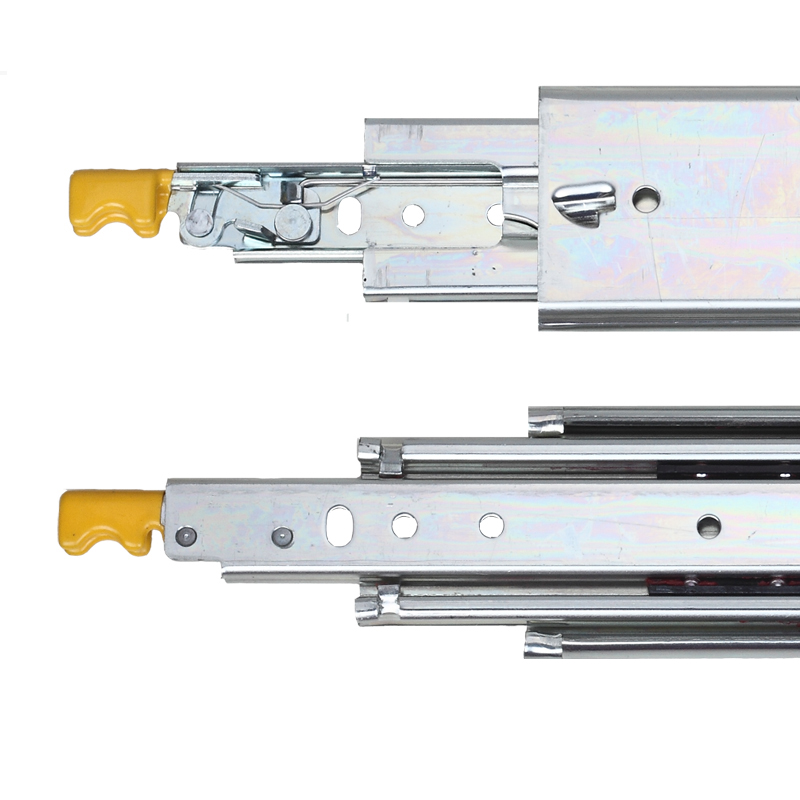
Start by defining what the lock must do in the installed position. Some projects require the drawer to remain secured when closed; others need a controlled position when fully extended. Confirm the required lock position, release direction and user operating sequence before selecting a configuration.
Match slide length to the drawer and extension requirement
The slide length should be reviewed against the usable drawer depth and the access required by the operator. A full-extension arrangement can provide access to the rear of the drawer, while the installed length and cabinet structure still need to be checked together. Avoid selecting by nominal drawer size alone.
Check mounting space and drawer construction
Measure the available side clearance, mounting surface and drawer structure. Include any obstructions, handles, equipment walls or installation tolerances that affect the slide position. A mounting sketch is useful whenever the installation differs from a standard side-mounted drawer.
Prepare the information needed for quotation
- Required slide length and extension requirement
- Locking position and release direction
- Drawer or equipment application
- Expected quantity and repeat-order profile
- Mounting dimensions, drawing or installation sketch
Review a locking slide configuration
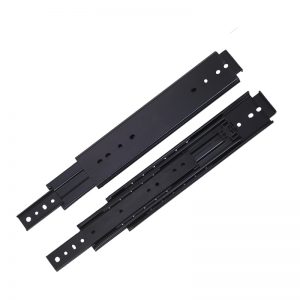
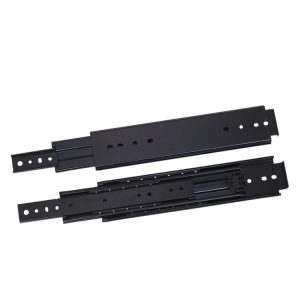
For a starting point, see the 76 Series Heavy-Duty Full Extension Locking Drawer Slide. Final suitability should be confirmed against the finished assembly and the project requirements supplied with the inquiry.