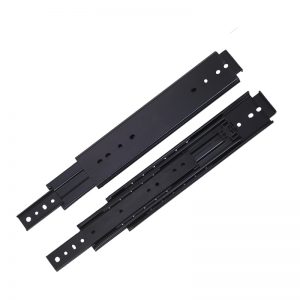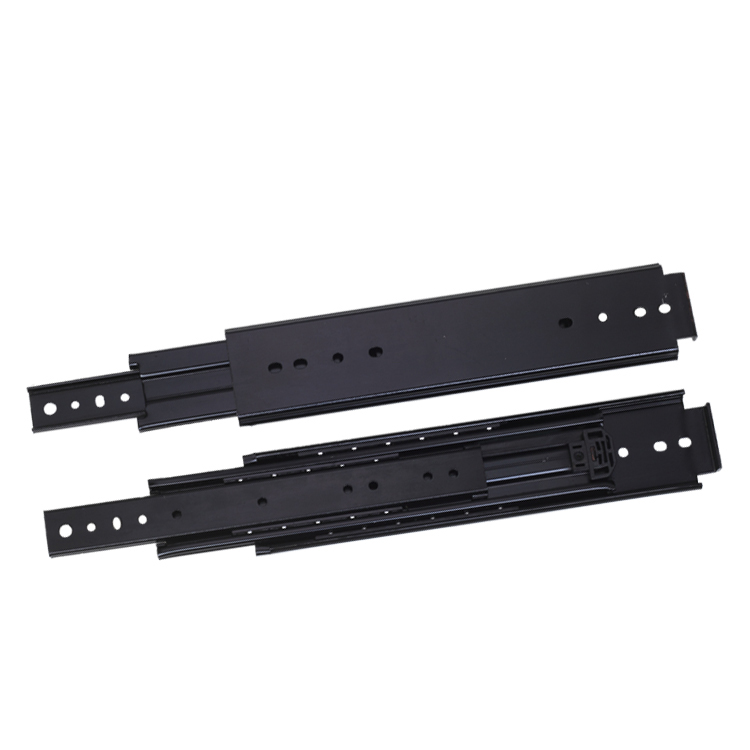
Equipment drawers, vehicle storage and industrial pull-out assemblies often have limited installation space. A slide can look correct in a catalog and still be unsuitable for the finished system if the required length, extension or side clearance has not been reviewed. This checklist helps engineers and buyers define the key dimensions before an RFQ.
Measure usable drawer depth
Use the internal mounting depth available to the slide rather than the external cabinet dimension. Allow for rear panels, drawer fronts, stops and any components that reduce the usable mounting length. Where the drawer is custom-built, include the planned construction details with the inquiry.
Define the access requirement
Decide how far the operator needs to access the drawer contents. The extension requirement affects the choice of configuration and should be stated alongside the required slide length. This is especially important for service vehicles, tool storage and equipment compartments where rear access may be required.
Check side clearance and mounting interfaces
Confirm the clearance available on both sides of the drawer, the mounting surface and the fixing approach. A practical drawing should identify the cabinet wall, drawer side, fixing locations and any interfaces that may obstruct the slide during travel.
Include operating conditions in the project review
Describe how the drawer will be used, what it carries, whether it is opened frequently, and whether the installation is stationary or mobile. These details help the supplier review the configuration around the actual application instead of making assumptions from a single product image.
Send a focused product inquiry
When you are ready, send the slide length, extension requirement, mounting dimensions and expected quantity through the 76 Series locking drawer slide product page, or use the full Request a Quote form when drawings and project files are available.