Soft-close is the first feature most buyers ask about when they spec drawer hardware for kitchens, wardrobes and living-room cabinetry. It is also the feature where component quality varies most between suppliers. Before you compare prices, settle the specification.
Damping mechanism: hydraulic or spring
Two mechanisms deliver the soft-close effect. Hydraulic dampers slow the drawer over the final 25–30 mm of travel and stay consistent over years of use; spring-assisted types are cheaper but lose damping force over time. For programs sold with a warranty, specify hydraulic damping and ask the supplier which mechanism each quotation is based on.
Load rating and extension
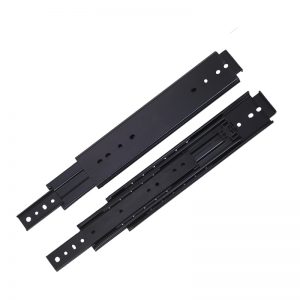
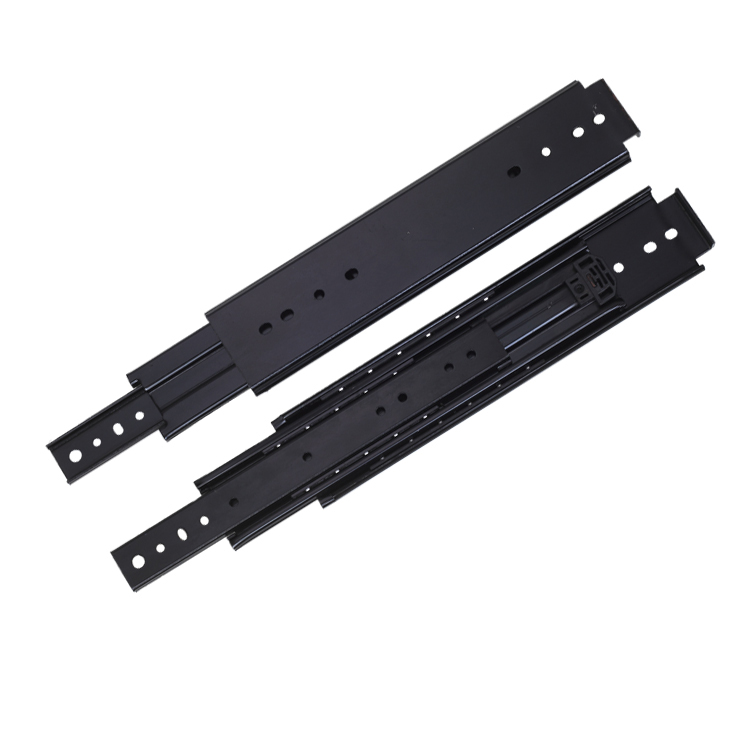
A standard kitchen drawer carries 10–20 kg when loaded; wardrobe and dresser drawers often carry more. Specify the pair rating you actually need — for example 45 kg per pair for a three-section ball bearing slide — so the supplier quotes the right ball count and rail section. Full extension (100% travel) matters for deep kitchen drawers where the back must be reachable.
Cycle life and testing
Ask for cycle life data: 50,000 open-close cycles is the common benchmark for residential hardware. Reputable factories run load cycling on a test rig and can share the report. If you need proof for a specific program, cycle life testing and load capacity testing can be arranged on demand — the report is delivered with your goods.
Finish that survives the kitchen
Zinc-plated steel is standard indoors, but drawers near sinks or in bathrooms see humidity. For those positions, specify stainless steel (304) or a zinc finish with higher salt spray hours. A simple rule: if the drawer sits within 1 m of water, ask about corrosion resistance before you approve the sample.
If there is one number to ask for when comparing soft-close slides, it is the damping force after 50,000 cycles, not the first one out of the box. That is the difference between a kitchen drawer that still closes itself after five years and one that slams by year two. Specify the mechanism, the pair rating and the cycle target up front, and let the sample prove it before your cabinetry line commits.