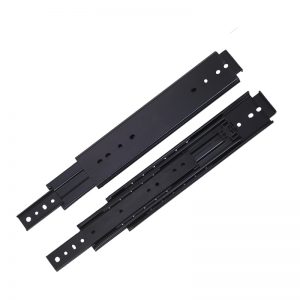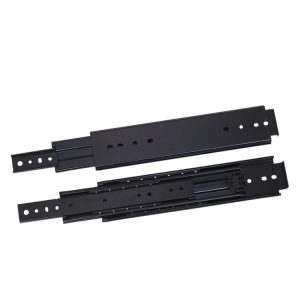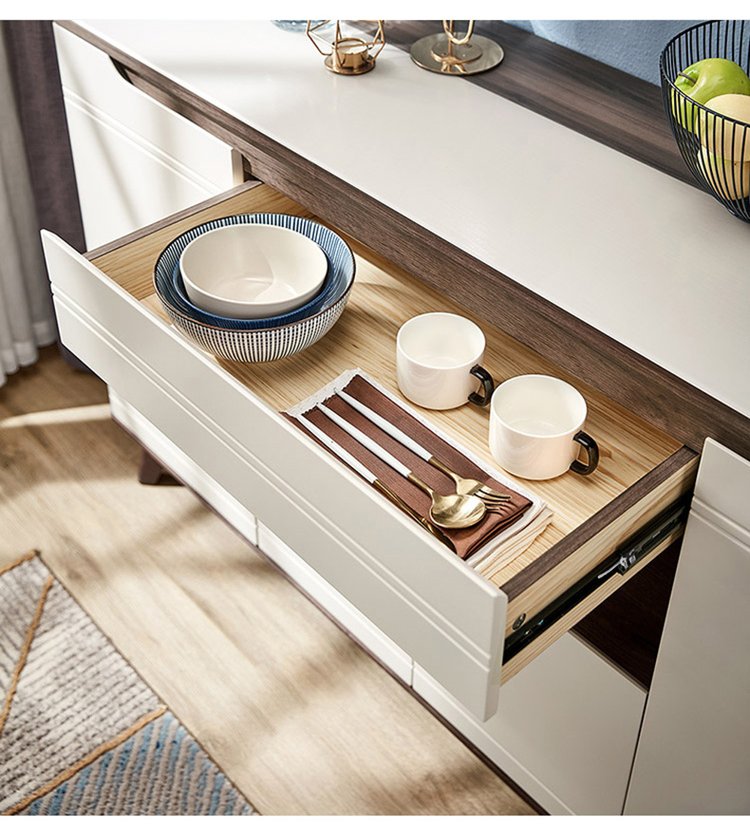
Cabinetry slides are specified for residential kitchens, commercial casework, laboratory furniture, and storage cabinetry where the drawer must travel cleanly out of the cabinet and back in without racking or noise. Application context drives the load class, the extension length, the bracket pattern, and whether a locking detent is required for in-service use.
Why full extension matters in cabinetry
Full extension travel gives the user access to the rear of the drawer box. Where contents are stacked to the back of the cabinet — pantry drawers, file drawers, deep kitchen drawers — partial extension simply does not allow the contents to be reached.

Selection considerations
- Drawer box type and side clearance (face frame vs frameless)
- Static load class for the intended contents
- Travel: full extension or 3/4 extension
- Detent / locking lever for in-cabinet or in-travel use
- Bracket pattern matched to the cabinet member
- Finish: zinc-plated for interior, black e-coat for visible cabinetry
Build quality and finish
Cabinet-grade slides are roll-formed from cold-rolled steel, with raceways drawn to hold the ball bearings in compression. The choice between zinc-plated and black e-coat finish is normally a cosmetic decision where the slide remains visible after installation, or a durability decision where the slide sits in a humid environment.

Share the drawer box dimensions, the cabinet member thickness, and the load you intend to carry. The engineering team will confirm the slide length, bracket pattern and finish combination that fits the application.
Visual reference
pull-out kitchen / extension slide reference context
Visual reference
pull-out kitchen / extension slide reference context
Project requirements
Confirm drawer box type (face frame vs frameless), interior cabinet depth, load class for the intended contents, and the required travel.
Decide whether a positive in/out detent or a full locking lever is needed before specifying the slide length and bracket pattern.
Installation & sizing notes
Mounting clearance and side-to-side tolerance must be held within the drawing nominal. Slide length is typically selected so the drawer box length equals slide length.
Pair the slide bracket with the intended cabinet member (wood screw, M5 machine screw, or 10-32 pan head) and confirm the drawer front reveal allowance after installation.